Search blog posts
This month's featured article

What to include in a risk register
A well-maintained risk register helps management identify, prioritise, and respond to risks effectively. All entities, regardless of size, complexity, or service delivery role, should document and regularly update their risks in a risk register to support effective management and ongoing monitoring. In this blog, we highlight why a reliable risk register is integral to managing risk and what it should include.
Recent posts

Internal controls are the people, systems, and processes that ensure an entity can achieve its objectives, prepare reliable financial reports, and comply with applicable laws.

In some shape or form, a belief in better public services has been a cornerstone for QAO over the past 160 years. In recent times, it’s been an articulated part of our vision. And I’ve been proud to be part of that for the past 40 years.

Our Annual report 2020–21 tabled in parliament yesterday, 30 September 2021. You can read our annual report here.

The hot topic for this financial year appears to be the implications of the IFRS Interpretations Committee’s (IFRIC’s) agenda decision Configuration or Customisation Costs in a Cloud Computing Arrangement (April 2021)1.

Queensland Treasury’s Financial Reporting Requirements for Queensland Government Agencies (FRRs) for 2020–21 are available on Treasury’s website:

The standard AASB 16 Leases is now in its second year of operation for public sector entities. In this article, we cover a brief update on some specific accounting issues that you may not have dealt with on transition.

As cyber attacks continue, cyber risk has become one of the top enterprise-wide risks facing entities. Entities need to remain vigilant and governance committees need to ensure they understand the impact of cyber risk on business strategy.
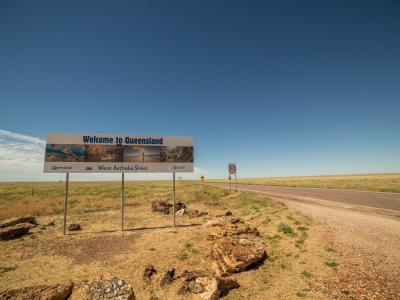
Auditing the right area at the right time is the key to achieving better public services for Queenslanders.

Most Queensland Government and local government entities revalue their land, buildings, and infrastructure every year. These assets can be highly specialised, geographically dispersed, and made of various components.

The day-to-day operations of public sector entities are getting busier all the time and changes to everyday activities can be seen as disruptive.